
Knitwear Sampling and Approval: A Practical Guide for Apparel Buyers
Understanding sample development, fit reviews, buyer comments and preparation for bulk production
Shristy Fashion Ltd. supports knitwear sample development and revisions according to buyer specifications and approval requirements, with pattern making handled in-house. For buyers, the practical task is to assess fit, measurements and construction, communicate specific corrections and identify which sample version is approved.
A sample review should make the next step clear: what meets the agreed requirements, what needs revision and which specifications or approvals remain outstanding before bulk production. Clear comments help distinguish a development reference from an approved production reference.
This guide explains the main sample types used in knitwear development and what international apparel buyers should review before providing approval.
Why sampling matters
A garment may appear suitable in a drawing or reference photograph but require adjustments when developed into a physical sample.
Sampling helps establish whether the proposed garment meets the intended design, fit, measurements, construction and other relevant requirements.
Different sample stages serve different purposes. Not every programme requires every sample type, and the sequence depends on buyer requirements and the development arrangements agreed for the product.
At Shristy Fashion, relevant development and sample revisions are supported according to buyer specifications, comments and approvals.
1. Development or proto sample
A development or prototype sample provides an early physical interpretation of the proposed garment.
It may be developed from a tech pack, reference sample, photographs or other available buyer information.
At this stage, buyers may examine:
- Overall garment appearance and silhouette
- Basic construction and design interpretation
- Fabric and material suitability
- Placement of significant design elements
- Differences between the sample and original reference
A development sample is not necessarily a production-approved garment.
Where further corrections are needed, they should be identified before moving to the relevant next stage.
2. Fit sample
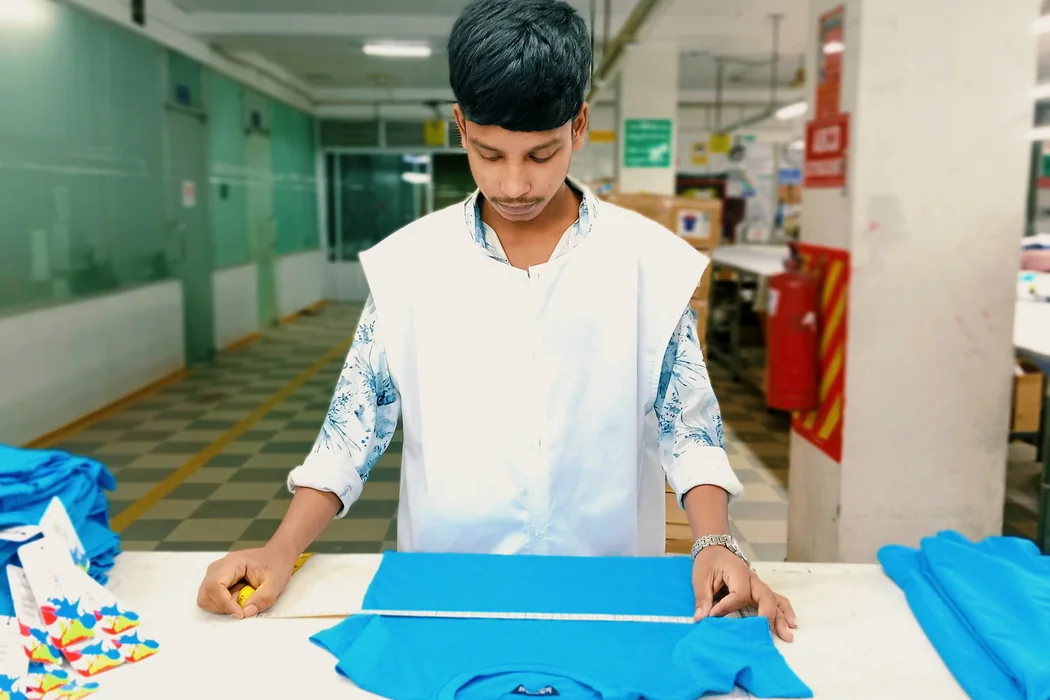
A fit sample helps the buyer assess the garment’s fit, proportions and relevant measurements.
Depending on the design, the review may consider body width, length, sleeve dimensions, neckline, shoulder positioning and other construction-related features.
Buyers should compare the sample against the intended fit standard and applicable measurement specification.
A useful fit review should produce clear, actionable comments.
For example, instead of simply stating that a garment is too loose, a buyer can identify the relevant measurement or fit area and provide the required correction.
Where revisions are necessary, the updated sample should be reviewed through the agreed approval process.
3. Size-set sample
A size-set sample helps assess how an approved or developed fit translates across the required size range.
A garment that fits correctly in one sample size may still require attention when graded into smaller or larger sizes.
Buyer reviews may include:
- Measurements against the size specification
- Proportions across the selected sizes
- Consistency of fit and construction
- Relevant grading or measurement concerns
The size-set review should be based on the actual programme’s approved specifications and tolerances.
Where corrections are identified, the relevant technical information should be updated before the production requirements are confirmed.
4. Sales or sample collection
Some programmes require samples for collection presentation, internal merchandising review or buyer sales activities.
These samples may serve a different purpose from fit or pre-production approval samples.
Buyers should specify the intended use, required styles, colours, sizes and presentation details.
A sales sample should not automatically be treated as approval for bulk production unless the relevant technical and commercial approvals have also been completed.
5. Pre-production (PP) sample
The pre-production sample is an important reference when preparing a garment for bulk manufacturing.
Its review should address the relevant agreed product requirements, including appearance, construction, measurements, materials, trims, artwork and other applicable details.
At this stage, buyers should clarify whether outstanding sample comments have been resolved and whether the appropriate specifications and approvals are available.
Shristy Fashion’s confirmed production-control framework includes pre-production review with reference to applicable buyer specifications, approved samples, measurements, workmanship and packing requirements.
Approval of one sample does not automatically resolve every other outstanding material, testing, packing or commercial requirement.
6. Shipment sample and other programme requirements
Some buyers request shipment samples or other programme-specific samples for review or reference.
The sample’s purpose and timing should be agreed according to the individual programme.
A shipment sample is not the same as a development, fit or pre-production sample, and it should not be used as a substitute for earlier necessary approvals.
How Shristy Fashion supports sample development
Shristy Fashion’s development arrangements include in-house pattern making and support for development/proto, fit, size-set, sales/collection, pre-production and shipment samples according to buyer specifications and approval requirements. Not every programme requires all six types, and in-house pattern making does not mean every process related to sampling is performed in-house.
An initial development discussion may begin with complete specifications or available references.
The relevant requirements are clarified through the development process, and revisions can be made according to buyer comments and approvals.
This is connected to Shristy’s broader manufacturing arrangement: cutting, sewing, garment finishing, garment quality control and packing are handled in-house. Knitting, dyeing, printing, embroidery, garment washing and special finishing are coordinated through external processing partners where required for confirmed programmes.
The objective is to establish a sufficiently clear and approved product reference for the manufacturing requirements that follow.
How to communicate useful sample comments
A sample review is more effective when comments identify the issue, the required correction and the reference against which the change should be assessed.
For example:
| Review area | Useful buyer feedback |
|---|---|
| Fit | Identify the specific fit area and desired correction |
| Measurements | State the relevant measurement and target specification |
| Fabric | Identify the required composition, construction or weight |
| Construction | Specify the seam, finish or construction detail requiring revision |
| Artwork | Confirm placement, size, colour or approved artwork reference |
| Trims | Identify the required trim specification or reference |
| Overall appearance | Provide photographs or annotated references where useful |
The table provides general buyer guidance; the applicable review and approval arrangements should be agreed for each programme.
Buyers should also identify the current sample version to avoid confusion between previous and revised references.
What should be confirmed before bulk production?
The exact approval requirements depend on the product and programme. As a practical guide, buyers should review the following before confirming readiness:
- Approved product reference: The applicable sample and version are clearly identified.
- Measurements and fit: The required specifications and relevant tolerances are agreed.
- Fabric and colour: Applicable material specifications and approvals are established.
- Artwork and trims: Relevant details have been reviewed and approved.
- Sample comments: Outstanding corrections are resolved or clearly documented.
- Quality requirements: Relevant workmanship, testing and inspection requirements are understood.
- Packing requirements: Applicable buyer instructions are confirmed.
- Commercial arrangements: Order details, quantities, timing and other terms are separately agreed.
A physical sample is an important reference, but it does not replace the complete set of requirements applicable to the order.
Preparing for a sampling discussion with Shristy Fashion
Buyers preparing to develop knitwear with Shristy Fashion can share their available technical specifications, reference garments, photographs, measurements and intended product details.
If a previous sample exists, identify its version and explain which features should be retained or changed.
Where a tech pack or measurement chart is incomplete, clearly distinguish confirmed specifications from areas requiring further development.
For guidance on organizing the initial information, see What to Include in a Knitwear Manufacturing Enquiry.
You can also review Shristy Fashion’s Manufacturing Capabilities for information about development, sampling and garment-production activities.
Discuss your product-development requirements
Shristy Fashion Ltd.
Narayanganj, Bangladesh
Email: info@shristyfashion.com
A clear sample reference, specific buyer comments and properly confirmed approvals help establish the requirements for subsequent manufacturing discussions.